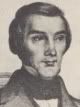

Where the hell has John Edwards been?
Previous: John Edwards' hypocrisy
John Edwards at least said it plainly: he wants to raise taxes on the rich to pay for universal health care. Those who understand free markets will find it strange that Edwards wants government to create a "health market," because government coercion (taxes and spending) and markets (real markets where supply and demand are free to work) are diametrically opposed.
First, let's address his last point:
So, where the hell has John Edwards been for the last few years, as capital gains tax revenues have surged? Is it never good enough that "the rich" made more while still paying more taxes? Evidently not. It's never enough for liberals: they have to get their greedy hands on every last dollar.
Now, as I've pointed out time and time again, taxing "the rich" may fund social services for everybody else, but it simultaneously deprives everybody else of jobs as "the rich" have less to spend and save. Bastiat has tried to tell us for over 150 years that taxation is merely a shift in economic expenditures, but socialists (including those who identify themselves with the euphemistic "progressive" and "liberal" labels) are too blinded in their "noble" endeavors, too willfully ignorant in their greed for others' money, and/or too stupid to learn.
If John Edwards is so adamant that "the rich" pay more taxes, then I challenge him to do it first and do it even better: I hereby challenge him to sell his new multi-million dollar houses, then give the money to charity. I'm sure even if he got only 50 cents on the dollar, he could still fund a lot of clinics that provide free or low-cost health care to people of low incomes.
Better yet, the next time he even thinks to build/buy an expensive house, he should just give the money away. Oh, but that would deprive the architects, planners, construction workers, et al, of jobs, right? Well, what did I just say in the first paragraph, and in previous posts? When "the rich" have less to invest in stocks and corporate bonds, companies create fewer jobs -- specifically, jobs for everybody else. When the rich have less to save in government bonds because we tax them more, what is the difference? Well, the difference is that when they are taxed, they have less incentive to earn as much as when they can instead lend money to governments.
Even luxury taxes only mean that "the rich" have less to spend on fancy jewelry, cars and boats that regular middle-class people make. "The rich" do not make Patek Philippe, Bentleys and yachts for each other. Oh, you might be well-paid to make fancy jewelry, but unless you're at the top, you won't be a multi-millionaire by merely assembling things that "the rich" buy.
Still, liberals argue, it's better to tax the money and spend it on social programs, rather than letting "the rich" spend it on what they want. But which is preferable: to have a "rich" person taxed $10,000 more to fund social programs, when a thick percentage will be lost to bureaucracy, or to let someone have a shot at the full $10,000 by offering goods and services? Well, liberals don't care about efficiency, or the deadweight loss that results from disincentives. To them, your money is theirs to spend as they see fit, everything else be damned.
However, Edwards has recently said a few things that are completely right -- just not for the reasons he said them.
Still, Edwards is correct about people without the two critical assets. People who are idiots and incompetent will most certainly be unattractive to those with capital. They'll certainly have a hard time competing against the smart and educated (which many academics prove are not the same thing). Why should a night janitor's paychecks be anything close to a supervisor who undertakes far greater responsibilities, or a filing clerk's pay begin to approach that of a portfolio manager's? It's not a matter of working "hard" hours of physical labor, or what you think you produce in value, but what value others place on your efforts. Their property, their rules, their judgment.
John Edwards at least said it plainly: he wants to raise taxes on the rich to pay for universal health care. Those who understand free markets will find it strange that Edwards wants government to create a "health market," because government coercion (taxes and spending) and markets (real markets where supply and demand are free to work) are diametrically opposed.
First, let's address his last point:
"Finally we need to do a much better job of collecting the taxes that are already owed," he said, specifically targeting what he said are large amounts of unpaid capital gains taxes.In January 2006, my blogfather Don Luskin cited Dan Clifton of the American Shareholders Association, noting that the 2003 capital gains tax cut has paid for itself. We can see that a tax cut produced greater revenues in the end, proving that Laffer's Curve is very much real. More recently, Don again cited Dan, who examined a CBO report and concluded, "Well in what could now be considered the worst forecast in modern times we find out today capital gains tax collections were actually $51 billion in 2003, $72 billion in 2004, $97 billion in 2005, and $110 billion in 2006. For 2005 and 2006 collections nearly doubled the initial forecast."
"We should have brokerage houses report the capital gains that people are incurring because we're losing billions and billions of dollars in tax revenue," Edwards said.
So, where the hell has John Edwards been for the last few years, as capital gains tax revenues have surged? Is it never good enough that "the rich" made more while still paying more taxes? Evidently not. It's never enough for liberals: they have to get their greedy hands on every last dollar.
Now, as I've pointed out time and time again, taxing "the rich" may fund social services for everybody else, but it simultaneously deprives everybody else of jobs as "the rich" have less to spend and save. Bastiat has tried to tell us for over 150 years that taxation is merely a shift in economic expenditures, but socialists (including those who identify themselves with the euphemistic "progressive" and "liberal" labels) are too blinded in their "noble" endeavors, too willfully ignorant in their greed for others' money, and/or too stupid to learn.
If John Edwards is so adamant that "the rich" pay more taxes, then I challenge him to do it first and do it even better: I hereby challenge him to sell his new multi-million dollar houses, then give the money to charity. I'm sure even if he got only 50 cents on the dollar, he could still fund a lot of clinics that provide free or low-cost health care to people of low incomes.
Better yet, the next time he even thinks to build/buy an expensive house, he should just give the money away. Oh, but that would deprive the architects, planners, construction workers, et al, of jobs, right? Well, what did I just say in the first paragraph, and in previous posts? When "the rich" have less to invest in stocks and corporate bonds, companies create fewer jobs -- specifically, jobs for everybody else. When the rich have less to save in government bonds because we tax them more, what is the difference? Well, the difference is that when they are taxed, they have less incentive to earn as much as when they can instead lend money to governments.
Even luxury taxes only mean that "the rich" have less to spend on fancy jewelry, cars and boats that regular middle-class people make. "The rich" do not make Patek Philippe, Bentleys and yachts for each other. Oh, you might be well-paid to make fancy jewelry, but unless you're at the top, you won't be a multi-millionaire by merely assembling things that "the rich" buy.
Still, liberals argue, it's better to tax the money and spend it on social programs, rather than letting "the rich" spend it on what they want. But which is preferable: to have a "rich" person taxed $10,000 more to fund social programs, when a thick percentage will be lost to bureaucracy, or to let someone have a shot at the full $10,000 by offering goods and services? Well, liberals don't care about efficiency, or the deadweight loss that results from disincentives. To them, your money is theirs to spend as they see fit, everything else be damned.
However, Edwards has recently said a few things that are completely right -- just not for the reasons he said them.
HANOVER, N.H.–Contrary to President Bush's arguments in New York yesterday that the economy is going strong, the administration's economic policies have been a big failure for millions of Americans, says Democratic presidential candidate John Edwards. "They're not working," the former senator from North Carolina told U.S. NewsAbsolutely correct. It's these millions of Americans who aren't working, whether not working enough or not at all. Jon Henke put it so well: "we don't have inequality in income—we have inequality in output. Some of us haven't been producing our share."
Edwards, interviewed while he was campaigning yesterday in New Hampshire, admitted that there has been economic growth but said there is also a "fundamental problem. The positive fruits of growth are not being shared by the American people at large." He said that the benefits of Bush's policies have mostly gone to "those with capital and a high level of education." As for those who don't have those two assets, "you struggle," Edwards said.Edwards is talking about having capital, forgetting that it works just as well to use someone else's money. I'm not talking about coercing the money from them via theft or taxation (I repeat myself there), but to appear attractive to those who will invest capital in you. And that doesn't always require starting up your own business: a firm can certainly invest its money and other resources in you, in the hope you will grow in value and return.
Still, Edwards is correct about people without the two critical assets. People who are idiots and incompetent will most certainly be unattractive to those with capital. They'll certainly have a hard time competing against the smart and educated (which many academics prove are not the same thing). Why should a night janitor's paychecks be anything close to a supervisor who undertakes far greater responsibilities, or a filing clerk's pay begin to approach that of a portfolio manager's? It's not a matter of working "hard" hours of physical labor, or what you think you produce in value, but what value others place on your efforts. Their property, their rules, their judgment.
His prescription includes reducing the benefits in the tax structure for the wealthy, increasing benefits for the middle class and overhauling the nation's "dysfunctional" healthcare system, which he said imposes huge costs on everyday Americans. "We want real opportunity for everybody," Edwards said. He added: "I will get rid of George Bush's tax cuts for the richest people." And he said, "It is not true that I will raise taxes on the middle class."Edwards probably isn't lying here. He won't raise taxes on the middle class -- he'll just tax "the rich" and deprive the middle class of jobs, explained above.
Labels: John Edwards, Taxes
posted by Perry Eidelbus at
10:46 PM
0 Comments


